
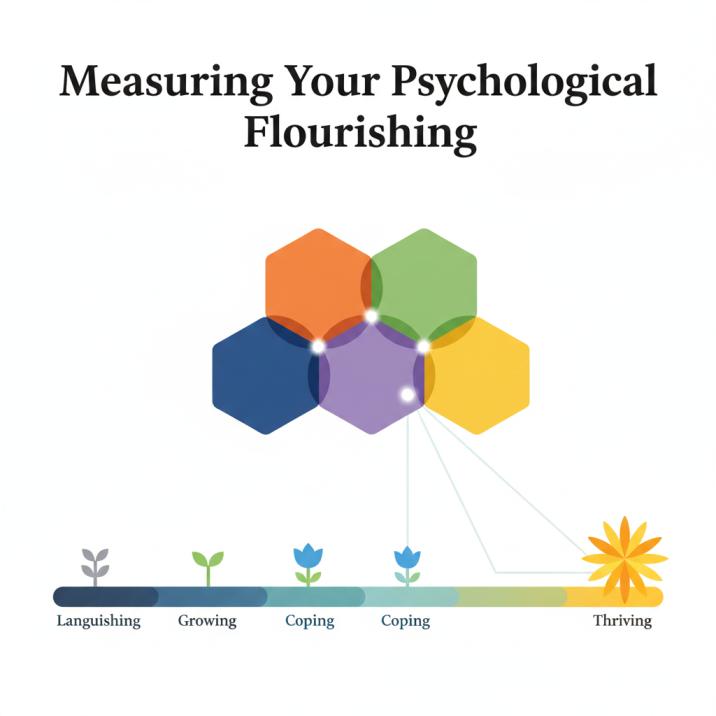
Have you ever had a week where nothing was technically “wrong,” yet everything felt a bit… empty? You weren’t necessarily sad or anxious, and you were checking off your to-do list, but the spark was missing. You were surviving, but you certainly weren’t flourishing.
In the world of psychology, we spent nearly a century focusing almost entirely on what was “broken.” We looked for depression, anxiety, and trauma. While that work is vital, it only tells half the story of the human experience. If mental health is a garden, removing the weeds (the illness) is important, but it doesn’t automatically mean the flowers will grow. For that, you need to cultivate the soil.
Flourishing is the high-water mark of human existence. It is a state where you feel your life has meaning, your relationships are supportive, and you are actively contributing to the world around you.
As the philosopher Aristotle taught through the concept of Eudaimonia:
“Happiness is the meaning and the purpose of life, the whole aim and end of human existence.”
But how do we measure something as grand as “purpose”? That is where the Flourishing Scale (FS) comes in.
What Does it Actually Mean to “Flourish”?
Flourishing isn’t a permanent state of “bubbly” happiness or a life without problems. In fact, some of the most flourishing people in history faced incredible hardships. Instead, flourishing is an internal sense of competence and connection.
According to the extensive research by Dr. Ed Diener (often called “Dr. Happiness”) and his colleagues, flourishing is built on several key psychological pillars:
1. Purpose and Meaning
This is the feeling that your life has a direction. It’s the “Why” that gets you out of bed in the morning. When you have purpose, even difficult days feel like they are part of a larger, meaningful story.
2. Supportive Relationships
Human beings are wired for connection. Flourishing requires a “social net”—the knowledge that there are people who care about you and, equally important, that there are people who rely on your care.
3. Engagement and Interest
Have you ever been so absorbed in a task that you lost track of time? This is often called “Flow.” Flourishing people find ways to stay engaged and curious about their work, their hobbies, and the world around them.
4. Contribution to the Well-being of Others
One of the great paradoxes of happiness is that it often comes from looking outward. Feeling that you add value to your community or that you’ve helped someone else is a massive driver of internal flourishing.
5. Self-Respect and Optimism
This isn’t about being “perfect.” It’s about having a fundamentally positive attitude toward yourself and a belief that, even when things are hard, you have the capacity to grow and that the future holds possibility.
Measuring Your Growth: The Flourishing Scale (FS)
How do you move from “just getting by” to truly thriving? It begins with an honest assessment of where you are right now.
The Flourishing Scale is a brief, 8-item summary of your self-perceived success in these vital areas. Because it focuses on your internal strengths rather than your bank account or your job title, it is a powerful tool for anyone looking to increase their true life satisfaction.
By taking a few minutes to check in with these eight points, you can identify which areas of your life are already “blooming” and which areas might need a little more “water” and attention.
➡️ Take the Flourishing Scale (FS) Check-In Now
Practical Ways to Move Toward “Thriving”
If your score wasn’t as high as you hoped, take heart. Flourishing is not a fixed trait; it is a set of muscles that can be strengthened. Here are three ways to start moving the needle today:
- Foster Micro-Connections: You don’t need a huge social circle to flourish. Focus on the quality of one interaction. Try using The GIVE Skill to make your next conversation a little more empathetic and supportive.
- Practice Savoring: Languishing often happens because we rush through the good moments. Use the Savour Sprint game to train your brain to hold onto joy for just a few seconds longer.
- Build Competence Through Small Wins: A lack of self-respect often comes from feeling like we aren’t “doing enough.” Use The Tiny Habits Method to master one tiny habit. Success, no matter how small, is the fuel for flourishing.
A Note on Safety and Responsibility
At PsychKit, we believe in the power of the human spirit to grow. However, we also know that sometimes, the “soil” of our lives is temporarily too depleted for us to flourish on our own.
Important Disclaimer: The Flourishing Scale is an educational tool for self-reflection and personal growth. It is not a clinical diagnosis, a medical evaluation, or a substitute for professional therapy. Every individual is responsible for how they interpret their results and the actions they take.
Emergency Notice: If you are feeling a total loss of meaning, deep despair, or are in a mental health crisis, please reach out for human help immediately. Visit your nearest Emergency Department or contact a local crisis helpline. Your life has inherent value that no test score can define, and professional medical support is the safest path during a crisis. These tools are designed for wellness, not for emergency intervention.
References & Scientific Sources
- Diener, E., Wirtz, D., Tov, W., Kim-Prieto, C., Choi, D. W., Oishi, S., & Biswas-Diener, R. (2010