
When we talk about Intellectual Disability (ID), we often focus on children. We worry about schools, early intervention, and speech therapy.
But children grow up.
A standard IQ test (like the Binet or WISC) might tell you a 25-year-old has the “mental age” of an 8-year-old, but that number is useless for real life. It doesn’t tell you if they can travel alone by bus. It doesn’t tell you if they can hold down a job in a bakery or a data entry center.
To help an adult with ID live a dignified life, we need to stop measuring their intelligence and start measuring their independence.
The Science: Functional & Vocational Assessment
Developed by premier institutes like NIEPID (National Institute for the Empowerment of Persons with Intellectual Disabilities), these tools shift the focus from “what is wrong with the brain” to “what can the hands do.”
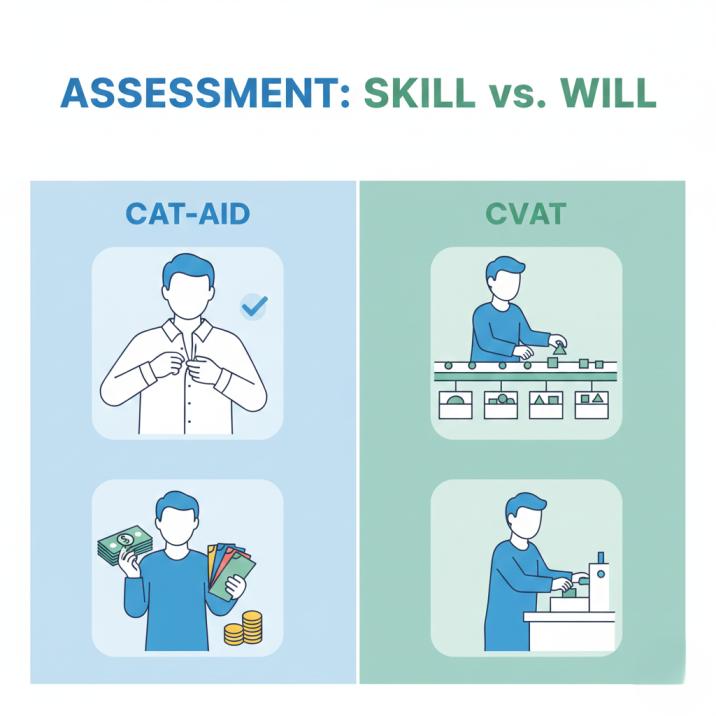
- CAT-AID (Checklist for Assessment of Adult Intellectual Disability): This tool evaluates Functional Skills. It checks if the adult can manage personal hygiene, handle money, travel safely, and interact socially. It answers the question: Can they live independently?
- CVAT (Comprehensive Vocational Assessment Tool): This is the bridge to employment. It assesses Work Readiness. It checks motor speed, eye-hand coordination, ability to follow multi-step instructions, and safety awareness. It answers the question: What kind of job fits them best?
The Tool: CAT-AID & CVAT
These are comprehensive checklists used by special educators and vocational rehabilitation centers.
👉 Access the Guide: CAT-AID / CVAT Assessment Guide
What To Do With Your Score
- For Parents: If your child is approaching 18, request these assessments instead of just an IQ test.
- The “Job Match”:
- High CVAT Score: The individual might be ready for Open Employment (regular jobs with slight accommodation).
- Medium CVAT Score: They might thrive in Supported Employment (jobs with a job coach).
- Low CVAT Score: They might benefit from Sheltered Workshops (protected environments focusing on simple tasks).
- The Goal: The ultimate aim of these tools is financial independence. Even earning a small salary can transform the self-esteem of an adult with ID.
Safety & Disclaimer
This content is for educational purposes.
- Not a DIY Test: These assessments must be conducted by a trained vocational instructor or rehabilitation psychologist.
- Guardianship: In India, these assessments also play a role in determining if a person needs a legal guardian under the National Trust Act.