
For decades, the metric of a “good school” in India was simple: Board Exam Results. If the marks were high, the school was succeeding.
But in recent years, the Directorate of Education (DoE), Delhi, flipped the script. They asked a radical question: What is the point of a 98% score if the student is anxious, depressed, or suicidal?
This marked the birth of the “Delhi Model” of education—a system that prioritizes the mind of the child as much as their marks. Central to this is a robust system of screening and support led by Educational and Vocational Guidance Counsellors (EVGCs).
The Science: Proactive vs. Reactive
Most schools operate on a “reactive” model—they wait for a student to fail or cause a fight before intervening.
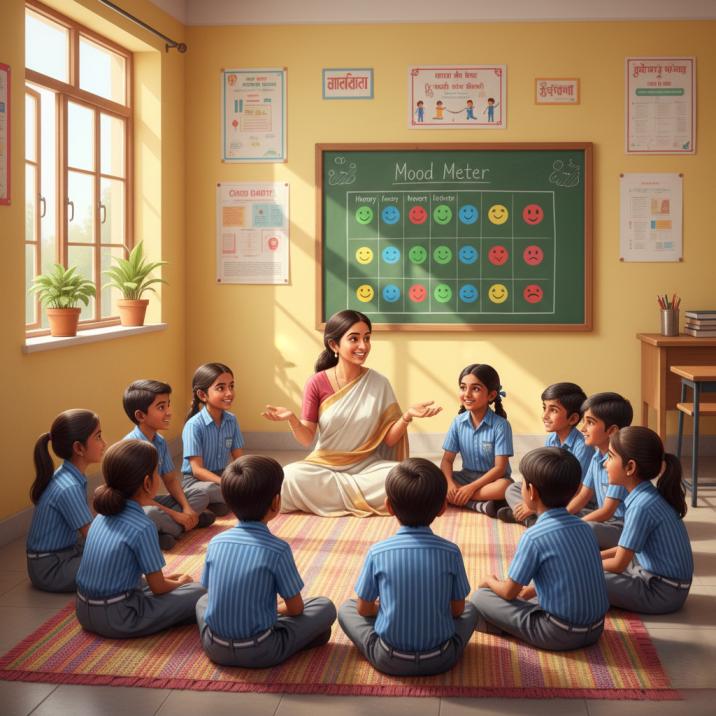
The DoE approach is “proactive.” By implementing regular screening checklists and the famous Happiness Curriculum, schools aim to spot emotional distress before it becomes a crisis.
The screening tools used by EVGCs in Delhi schools are designed to identify students who are:
- Withdrawn: consistently silent or isolated.
- Aggressive: prone to sudden outbursts.
- Absent: frequently missing school (truancy).
- Struggling Academically: sudden drop in grades.
This data allows the school to move from “punishment” to “counseling.”
The Tool: DoE Screening Guidelines
While specific internal checklists vary by year and circular, the core framework revolves around the “General Observation Checklist” used by class teachers to refer students to the EVGC.
👉 Access the Guide: DoE Delhi Student Screening & EVGC Protocols
What To Do With This Information
- For Teachers: If you work in a Delhi government school, your “General Observation” is the first line of defense. You are not expected to be a psychologist. Your job is simply to flag the change in behavior and refer to the EVGC.
- For Parents: If an EVGC calls you for a meeting, go. It is not a complaint session. They are trained professionals (often with Psychology degrees) whose job is to help your child navigate stress, exam pressure, and adolescence.
- For Private Schools: The “Delhi Model” is now being studied worldwide. Private schools can adopt these simple observation checklists to create a “Safety Net” for their own students.
Safety & Disclaimer
This content is for educational purposes.
- Not a Label: Being flagged for counseling does not mean a student is “mad” or “mental.” It means they are human and need support.
- Mandate: The DoE has mandated the presence of EVGCs in schools. If your government school does not have one, you have the right to petition the Principal.
References
- Directorate of Education (DoE), Govt. of NCT of Delhi. (2018). Happiness Curriculum: Teacher’s Manual. SCERT Delhi.
- DoE Circulars. Guidelines for Educational and Vocational Guidance Counsellors (EVGCs) in Schools.
- Bhatia, H., & Sethi, A. (2019). The Happiness Curriculum: A transformation in the Delhi government schools. International Journal of Research and Analytical Reviews.