
Uncategorized

Mental Brakes with Stop-Signal Rally

The Power of “Stopping”: Strengthening Your Mental Brakes with Stop-Signal RallyMental Brakes with Stop-Signal RallyThe Power of “Stopping”: Strengthening Your Mental Brakes with Stop-Signal Rally

We often talk about “willpower” as the ability to do hard things: to go to the gym, to write the essay, to eat the salad. But the other half of willpower is the ability to stop doing things. It is the ability to catch a wine glass as it falls. It is the ability to […]

The Power of “Stopping”: Strengthening Your Mental Brakes with Stop-Signal RallyMental Brakes with Stop-Signal RallyThe Power of “Stopping”: Strengthening Your Mental Brakes with Stop-Signal Rally Read More »

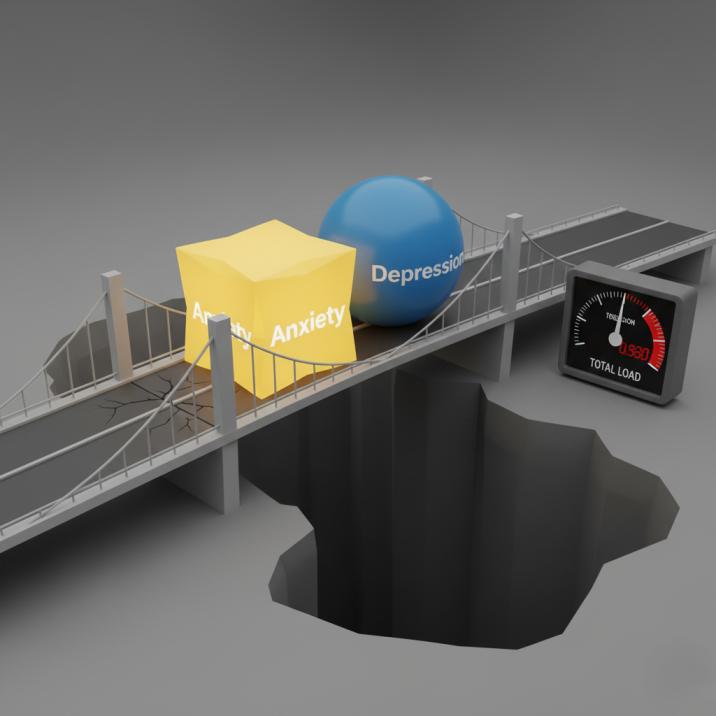
The Total Load: Measuring Anxiety and Depression with PHQ-ADS

In the world of mental health, we often talk about conditions as if they are separate islands. You either visit “Anxiety Island” or “Depression Island.” But in reality, most people live on a bridge between the two. It is incredibly common to feel the heavy, slow fog of depression and the racing, sharp edge of

The Total Load: Measuring Anxiety and Depression with PHQ-ADS Read More »

Tracking Your Mood: Assessing Depression Severity with the PHQ-8

Knowing that you are depressed is one thing. Understanding how deeply it is affecting you is another. Depression isn’t a simple on/off switch; it’s a spectrum. Some days it’s a background noise (mild); other days it’s a deafening roar (severe). Understanding where you sit on this spectrum is crucial because the strategy for handling a

Tracking Your Mood: Assessing Depression Severity with the PHQ-8 Read More »

Are You Truly Happy

Are You Truly Happy? Measuring Your Life Satisfaction with the SWLS

When someone asks, “How are you?” we usually give a standard, one-word answer: “Fine” or “Good.” But if we sit quietly and look at the bigger picture of our lives, the answer is often more complex. Happiness is a slippery word. We can be happy in one moment because we are eating a great meal,

Are You Truly Happy? Measuring Your Life Satisfaction with the SWLS Read More »

Dream Rewrite

PsychKit™ Dream Rewrite Rewrite Storyboard (0) About How to Play ✍️ 1️⃣ Think of a recent, brief nightmare or distressing dream. 2️⃣ Write down the “nightmare” part in the first box. 3️⃣ Now, rewrite the ending. Change it to be neutral, positive, or even absurd. You are the director! 🎬 4️⃣ Save it to your

Dream Rewrite Read More »

The Stanford Sleepiness Scale: A Quick Check-In to Assess Your Energy Levels

How are you feeling, right now, in this very moment? It’s a simple question, but most of us rarely pause to answer it honestly, especially when it comes to our energy levels. We get a poor night’s sleep and try to “power through” the day with coffee and sheer will, often ignoring our body’s clear

The Stanford Sleepiness Scale: A Quick Check-In to Assess Your Energy Levels Read More »

Polyvagal Theory, Simplified: How to Navigate Your Nervous System for Less Stress

Have you ever felt a sudden shift in your mood for no apparent reason? One moment you’re calm and engaged, and the next you’re anxious and irritable, or perhaps numb and disconnected. These shifts aren’t random. They are the language of your nervous system as it constantly scans the world for signs of safety and

Polyvagal Theory, Simplified: How to Navigate Your Nervous System for Less Stress Read More »

How Stressed Are You, Really? Take the Perceived Stress Scale (PSS-10) to Find Out

“I’m so stressed.” It’s a phrase we use every day. We say it when we’re busy, when we’re frustrated, and when we feel overwhelmed. But what does it really mean? Two people can face the exact same demanding situation, and one might feel invigorated while the other feels completely crushed. This is because stress isn’t

How Stressed Are You, Really? Take the Perceived Stress Scale (PSS-10) to Find Out Read More »

The Pomodoro Technique: Use Our Focus Timer to Beat Distractions and Prevent Burnout

Does this sound familiar? You sit down at your desk with a clear goal, ready to be productive. But then, an email notification pops up. A text message buzzes. You remember one more thing to add to your grocery list. Before you know it, an hour has passed, and you’ve been busy all morning, but

The Pomodoro Technique: Use Our Focus Timer to Beat Distractions and Prevent Burnout Read More »

Are You Burned Out? 7 Surprising Signs and What to Do Next (OLBI Test)

There’s a huge difference between stress and burnout. Stress is the feeling of being overwhelmed, of having too much on your plate. Burnout is the feeling of being empty, of having nothing left to give. It’s a state of profound emotional, physical, and mental exhaustion caused by prolonged and excessive stress. And often, the signs

Are You Burned Out? 7 Surprising Signs and What to Do Next (OLBI Test) Read More »

Feeling Lonely? A Practical Guide to Reconnecting, One Small Step at a Time

Loneliness is a uniquely painful human experience. It’s a quiet ache, a feeling of being on the outside looking in. It’s important to know that feeling lonely has very little to do with how many people are around you. You can be in a crowded room, in a relationship, or surrounded by family and still

Feeling Lonely? A Practical Guide to Reconnecting, One Small Step at a Time Read More »

The GIVE Skill: 3 Simple Steps to Build Kinder, Stronger Relationships

In our most important relationships, disagreements and misunderstandings are inevitable. In these moments, our emotions can take over, and our instinct might be to prove our point, win the argument, or defend our position. But what if our primary goal isn’t to be right, but to stay connected? This is where the GIVE skill from

The GIVE Skill: 3 Simple Steps to Build Kinder, Stronger Relationships Read More »

Are Your Attachment Patterns Affecting Your Relationships? (ECR-R Explained)

From our very first moments, we are wired for connection. Our earliest relationships with caregivers form a powerful, often unconscious, blueprint for how we navigate intimacy as adults. This blueprint shapes our expectations, our fears, and our behaviors in our most important relationships. These are our attachment patterns. Do you find yourself constantly worrying about

Are Your Attachment Patterns Affecting Your Relationships? (ECR-R Explained) Read More »