
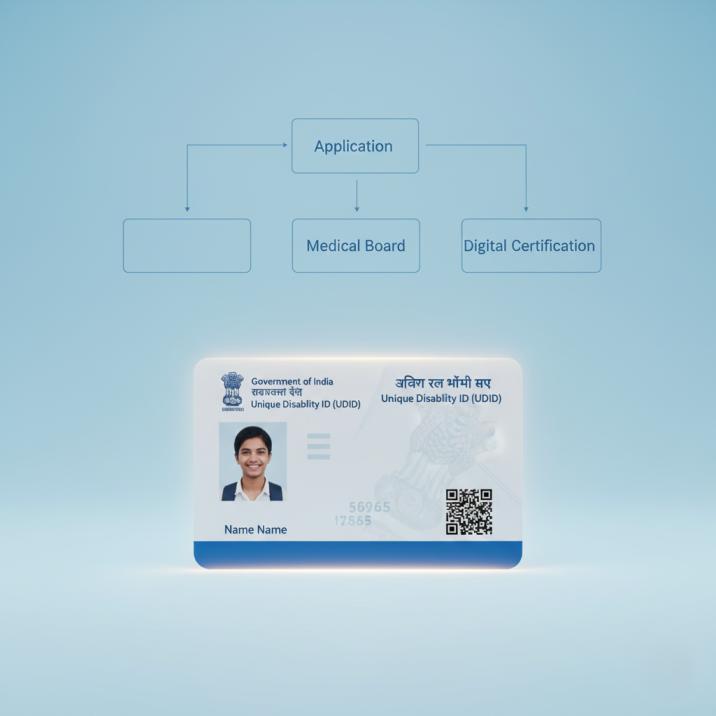
For millions of Indians with disabilities, the Disability Certificate is not just a piece of paper. It is a lifeline. It grants access to scholarships, railway concessions, government jobs, and specialized equipment.
But for years, the process of getting one was a bureaucratic nightmare—paper forms, different rules in different states, and endless trips to the hospital.
The Department of Empowerment of Persons with Disabilities (DEPwD) has been working to change this. With the massive push towards digitization in 2024 via the UDID (Unique Disability ID) project, the rules of the game have changed. The new assessment guidelines aim to make the process transparent, uniform, and—crucially—digital.
The Science: Standardization & Digitization
The core philosophy of the 2024 guidelines is “One Nation, One Card.”
Previously, a certificate issued in Maharashtra might not have been accepted in Tamil Nadu. Now, with the UDID system, assessment data is uploaded to a central server (Swavlamban portal).
The guidelines also update the medical criteria for assessing disabilities, particularly for newer categories recognized under the RPwD Act 2016, such as:
- Blood Disorders: Thalassemia, Hemophilia, Sickle Cell Disease.
- Neurological Conditions: Parkinson’s, Multiple Sclerosis.
- Developmental Disabilities: Specific Learning Disabilities (Dyslexia), Autism.
The new “Assessment Aide” ensures that doctors across India use the exact same formula to calculate the “Percentage of Disability,” reducing human error and bias.
The Tool: The Assessment Aide
This isn’t a single “test” you take at home. It is the reference manual used by the Medical Board when you walk in for your assessment. However, knowing what is inside helps you prepare.
👉 Access the Guide: DEPwD Assessment Guidelines & Process
How the Process Works (2024 Update)
- Apply Online: You no longer go to the hospital first. You must apply on the Swavlamban Website (swavlambancard.gov.in).
- The Appointment: You will receive a notification to visit your District Hospital with your specialized medical reports (e.g., audiogram for hearing loss, IQ report for ID).
- The Assessment: The Medical Board doctors will use the DEPwD scales (like ISAA for autism or IDEAS for mental illness) to assign a percentage.
- The Digital Card: Once approved, you don’t need to collect a paper file. Your UDID card is mailed to you, and a digital version is available online.
Safety & Disclaimer
This content is for educational purposes.
- Beware of Touts: The entire application process is free and online. Do not pay agents to get a UDID card; they cannot influence the Medical Board’s decision.
- Validity: UDID cards now come with a QR code verifiable by any agency (Railways, UPSC, etc.), ending the hassle of carrying photocopies.
References
- Department of Empowerment of Persons with Disabilities (DEPwD). (2018). Guidelines for Evaluation and Assessment of Various Disabilities under RPwD Act, 2016. Gazette of India.
- Ministry of Social Justice and Empowerment. (2024). Annual Report: Implementation of UDID Project.
- Government of India. (2016). The Rights of Persons with Disabilities (RPwD) Act, 2016.