
For someone with Panic Disorder, the body is a terrifying place.
A slight jump in heart rate isn’t just exercise; it’s a heart attack. A moment of dizziness isn’t just hunger; it’s a stroke. A shortness of breath isn’t just humidity; it’s suffocation.
This is called Catastrophic Misinterpretation. You aren’t afraid of the grocery store or the elevator; you are afraid of how your body feels when you are there. You are afraid of the fear itself.
The most effective treatment for this is Interoceptive Exposure—deliberately inducing these sensations to prove to your brain that they are safe. But doing this alone is scary.
Panic Lab turns this terrifying therapy into a manageable game.
The Science: Making Friends with Adrenaline
The Amygdala learns by experience, not by logic. You can tell yourself “I am safe” a thousand times, but until you experience a racing heart without dying, your brain won’t believe you.
Panic Lab guides you through “Symptom Induction.” It asks you to perform small physical tasks—like breathing through a straw or spinning in a chair—that mimic the symptoms of panic.
By doing this in a “game” context, you change the framing. Instead of being a victim of the symptom, you are the creator of it. This shift from passive to active is crucial. It gives you a sense of agency. You learn that you can turn the symptoms on, and importantly, you can turn them off.
The Game: Panic Lab
The “Lab” consists of a series of mini-challenges (levels):
- Level 1 (The Straw Run): Breathe through a narrow straw for 60 seconds. (Mimics shortness of breath).
- Level 2 (The Spin): Spin in your chair for 30 seconds and then try to walk a straight line. (Mimics dizziness/disorientation).
- Level 3 (The Step-Up): Do rapid step-ups to elevate your heart rate to 140 BPM. (Mimics racing heart).
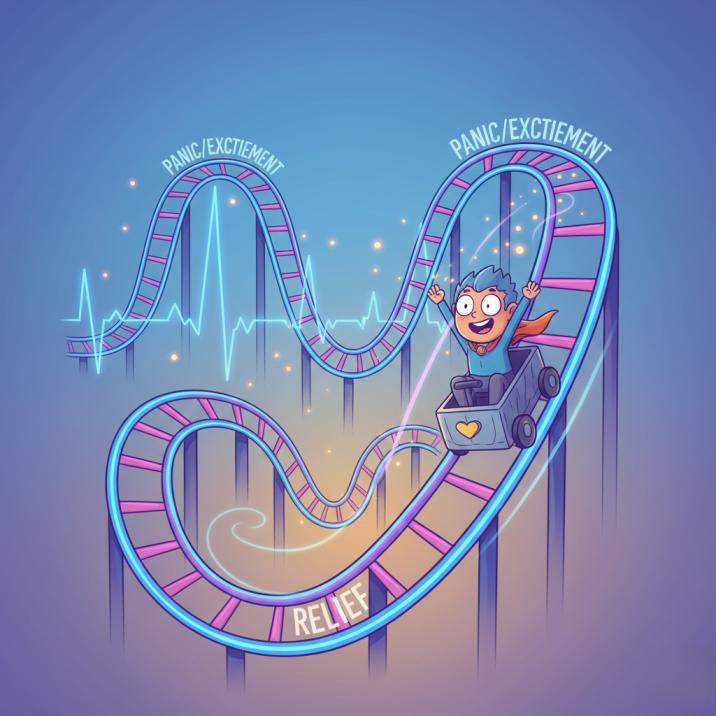
After each challenge, the game asks you to rate your anxiety and simply wait until it drops by half. This waiting period is where the healing happens. It teaches you the most important lesson of all: Anxiety always falls. It is a wave, not a permanent state.
👉 Enter the Lab: Panic Lab Exposure Game
Actionable Advice
- Ride the Wave: When you feel the dizziness or the racing heart, do not try to distract yourself. Do not close your eyes. Look at the sensation. Describe it. “My heart is beating fast.” Say it neutrally.
- Start Small: Do not do all levels at once. Pick one symptom that scares you the most (e.g., dizziness) and practice that one “game” daily until it becomes boring. Boredom is the cure for anxiety.
Safety & Disclaimer
- This tool is for educational purposes.
- Medical Clearance: CRITICAL: Do not use this tool if you have a known heart condition, asthma, epilepsy, or are pregnant. Consult your doctor before starting any exposure exercises that involve physical exertion or breathing changes.
- Support: It is best to try this for the first time with a trusted friend or therapist nearby.
References
- Barlow, D. H., & Craske, M. G. (2000). Mastery of your anxiety and panic. Oxford University Press.
- Boettcher, J., et al. (2016). Internet-based interoceptive exposure for panic symptoms: A randomized controlled trial. Journal of Consulting and Clinical Psychology.
- Deacon, B. J., et al. (2013). Interoceptive exposure in the treatment of panic disorder: A review of the literature. Journal of Anxiety Disorders.