
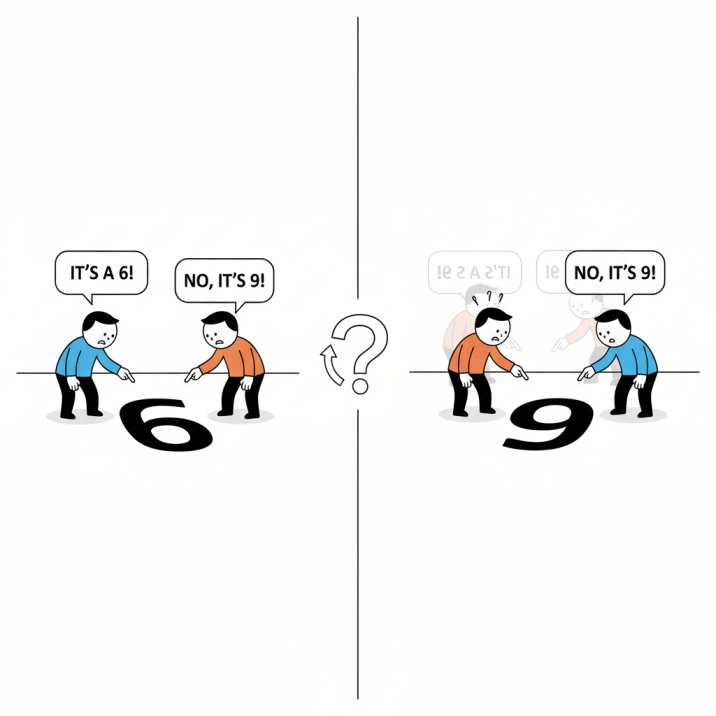
When we argue, we don’t think we are sharing an opinion. We think we are stating the truth.
“You were rude.” “You are lazy.”
We are trapped in our own skull. We have access to all our own intentions (“I didn’t mean to hurt you”), but we only see the other person’s actions. This is called the Fundamental Attribution Error. We judge ourselves by our intentions and others by their actions.
To solve conflict, we need to upgrade our Theory of Mind—the ability to understand that other people have beliefs, desires, and knowledge that are different from our own.
Perspective Play is a simulator for stepping into someone else’s shoes.
The Science: The “Three Positions”
In family therapy and NLP, there is a technique called “Perceptual Positions”:
- First Position: Looking through your own eyes (Self).
- Second Position: Looking through the other person’s eyes (Other).
- Third Position: Looking from the ceiling like a fly on the wall (Observer).
Studies show that shifting to the “Third Position” drastically reduces anger. It detaches you from the immediate emotional heat and allows you to see the dynamic rather than just the offense.
The Game: Perspective Play
- The Scene: A conflict scenario is played out (e.g., “The Dirty Dishes Fight”).
- The Switch: You play the scene first as Character A. You hear their inner monologue (“I’m so tired, why won’t they help?”).
- The Swap: You then replay the exact same scene as Character B. You hear their inner monologue (“I had a terrible day at work, I just need 5 minutes”).
- The Synthesis: The game challenges you to write a “Bridge Statement” that validates both truths.
👉 Play the Game: Perspective Play
Actionable Advice
- The “Steel Man” Technique: Instead of “Straw Manning” your opponent (making their argument look weak), try to “Steel Man” it. Try to describe their position so well that they say, “Yes, exactly!” Only then are you allowed to disagree.
- Physical Movement: If you are fighting with your partner at the dinner table, actually stand up and switch chairs. The physical change in perspective often triggers a mental shift.
Safety & Disclaimer
- This tool is for communication skills.
- Abuse Note: You are not required to “empathize” with an abuser. Understanding why someone hurts you does not mean you have to accept it.