
You send a text to a friend. They reply with just “Okay.”
What is your immediate reaction? A) They are busy. B) They are mad at me. I did something wrong. They hate me.
If you chose B, you likely have what psychologists call a Negative Interpretation Bias.
Social Anxiety isn’t just about being shy. It is a processing error. Your brain takes ambiguous information (a blank stare, a short text, a quiet pause) and automatically fills in the blanks with the worst possible scenario. You aren’t seeing reality; you are seeing a nightmare version of it constructed by your fears.
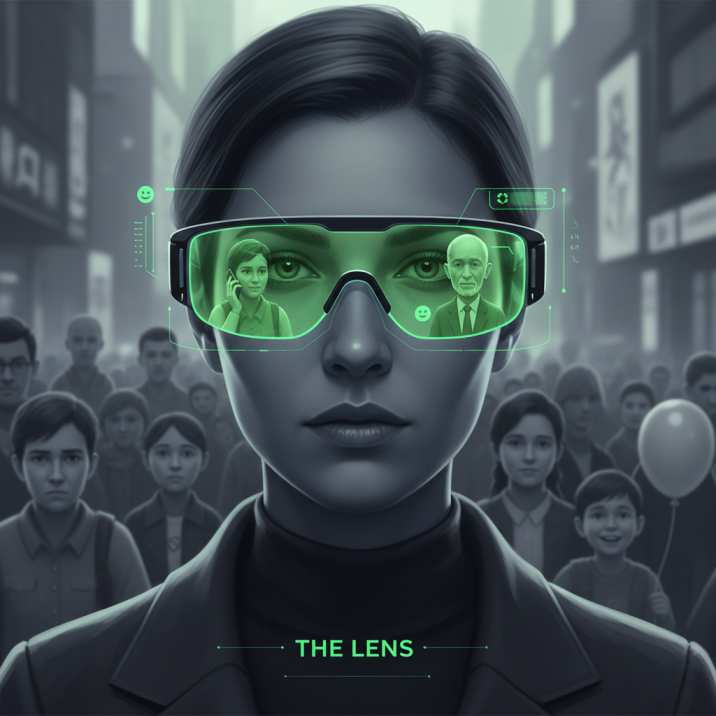
Social Lens is a tool to clean your glasses.
The Science: Cognitive Bias Modification (CBM-I)
This game is based on Cognitive Bias Modification for Interpretation (CBM-I).
Research shows that anxious people have a lower threshold for detecting anger and a higher threshold for detecting happiness. You might see a “neutral” face as “slightly hostile.”
CBM-I works by repeatedly exposing you to ambiguous situations and forcing you to resolve them positively. It’s like muscle memory for optimism. By doing this hundreds of times in a game, your brain starts to default to the positive interpretation in real life.
The Game: Social Lens
- The Scenario: You see a face that is morphed to be 50% Happy and 50% Angry (a truly ambiguous expression).
- The Question: Is this person Positive or Negative?
- The Training: If you click “Negative,” the game buzzes. It corrects you. It reinforces the idea that this face is safe.
- The Progression: As you get better, the faces become more subtle. You learn to spot the tiniest hint of a smile in a sea of neutrality.
👉 Play the Game: Social Lens Interpretation Bias Game
Actionable Advice
- Check the Facts: When you feel rejected, ask yourself: “Do I have evidence for this, or is this my interpretation?” Did they actually say they were angry, or did they just not use an emoji?
- The “Benefit of the Doubt” Game: For one day, pretend that everyone likes you. Just pretend. Interpret every confusing look as “they are thinking about how nice my shirt is.” See how it changes your confidence.
Safety & Disclaimer
- This tool is for social confidence training.
- Not Gaslighting: This isn’t about ignoring real abuse. If someone is actually yelling at you, that’s negative. This tool is for the ambiguous gray areas where anxiety thrives.