
Have you ever felt an emotion so intense it felt like a tidal wave? A moment where your thoughts are racing, your body is buzzing with adrenaline, and you feel completely overwhelmed—a 10 out of 10 on the distress scale. In these moments, trying to “think” your way calm can feel impossible.
What if you had a physiological emergency brake?
Introducing the TIPP skill, one of the most powerful crisis survival techniques from Dialectical Behavior Therapy (DBT). TIPP is not about changing your thoughts; it’s about changing your body chemistry, fast. By using these four steps, you can rapidly cool down a distressing emotion and pull yourself back from the edge.
This isn’t just a coping mechanism; it’s a first aid kit for your emotional system. Let’s open it up and see what’s inside.
A Quick but Important Note on Safety The TIPP skill is for managing overwhelming emotional moments. It is not a substitute for therapy or emergency care. If you are in crisis, thinking of harming yourself, or feel you are in danger, please contact your local emergency services immediately or go to the nearest hospital. Your safety is the first priority.
T: Temperature
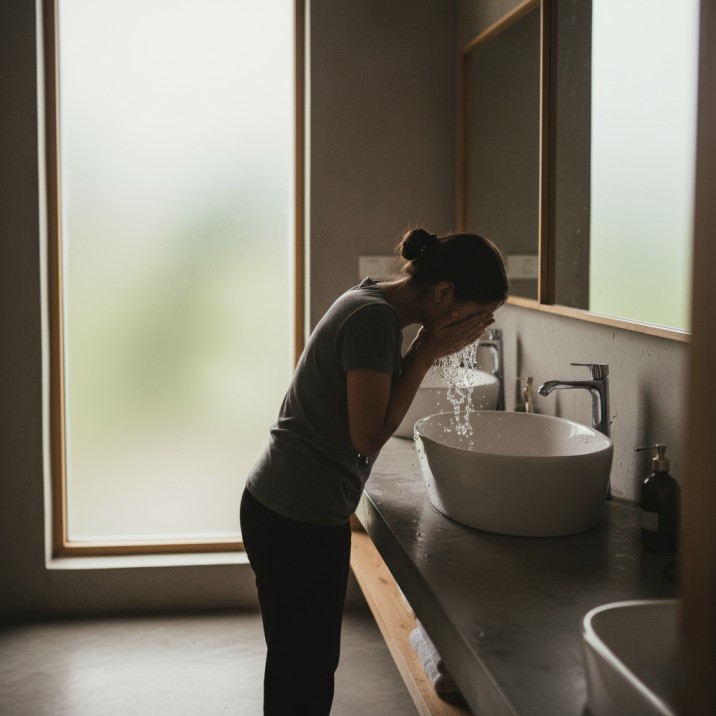
The fastest way to hit the brakes on emotional chaos is by changing your temperature. Specifically, by applying intense cold to your face.
This triggers a remarkable, built-in biological response called the “mammalian dive reflex.” This reflex instantly tells your brain’s alarm system to stand down by slowing your heart rate and redirecting blood flow away from non-essential areas. It’s a powerful and immediate signal to your body that the crisis is passing.
How to do it
- Fill a bowl with cold water (add ice for a stronger effect).
- Hold your breath, lean over, and submerge your face for 15-30 seconds.
- Alternatively, you can hold a gel ice pack or even a bag of frozen vegetables on your eyes and cheeks.
I: Intense Exercise
When you’re in a state of high emotional arousal, your body is flooded with stress hormones like adrenaline and cortisol. It’s primed for fight or flight. Intense exercise gives that energy a job to do and burns it off quickly.
The key here is “intense.” This is not a marathon; it’s a sprint. The goal is to get your heart rate up for a very short period to expend that raw physical energy.
How to do it
- Engage in 60-90 seconds of strenuous movement.
- Try running in place as fast as you can, doing rapid jumping jacks, or performing wall push-ups until you feel the energy shift.
P: Paced Breathing
After the storm of a panic surge, your breathing is often shallow and rapid. Paced breathing is how you guide your body back to a state of calm. The most important rule is to make your exhale longer than your inhale.
Slowing your exhale stimulates the vagus nerve, which activates your parasympathetic nervous system—your body’s natural relaxation response. It’s like gently telling your entire system, “The danger is over. You can stand down.”
How to do it
- Breathe in slowly through your nose for a count of 4.
- Breathe out slowly and gently through your mouth for a count of 6 or 8.
- Pause for a second, and repeat. Focus only on the counting and the sensation of your breath. For a guided experience, you can use our Breathing Anchor Tool.
P: Paired Muscle Relaxation
It is physically impossible to be tense and relaxed at the same time. This final step uses that fact to your advantage by systematically tensing and then releasing muscle groups, which forces your body into a state of deep relaxation.
This process also pulls your attention away from distressing thoughts and grounds you in the physical sensations of your body.
How to do it
- As you breathe in, tense a specific muscle group tightly (but not to the point of pain). For example, clench your fists.
- Hold the tension for 5-6 seconds. Notice it.
- As you breathe out, release the tension completely and all at once. Notice the difference in how the muscle feels.
- You can do this for all major muscle groups, from your toes to your face. Our Progressive Relaxation Guide can walk you through the full sequence.
Your Interactive TIPP Kit
Remembering all these steps during a crisis can be difficult. That’s why we built an interactive tool to guide you through the entire TIPP sequence, step-by-step. Let it do the thinking for you.
You Are More Powerful Than Your Emotions
The TIPP skill is a profound reminder that you are not at the mercy of your feelings. You have direct, tangible tools to influence your own physiology and bring yourself back to a place of safety and control. Practice these steps when you are calm, so they become a familiar ally when you need them most.